Sanding Products
Help choosing sandpaper grit and format for wood, paint and refinishing jobs.
Best For Job
- Best grit for scuffing a cabinet before paint
For most painted wood cabinets, use 180- or 220-grit sandpaper to dull the sheen and improve paint adhesion without creating deep scratches. Adjust the grit for the existing finish and cabinet material.
- Best Paper for Oak Before Stain
For most oak projects, finish with 150-grit sandpaper before staining. Use 120 grit first when the surface needs more leveling, then progress to 150 without skipping grits. Choose finer paper only when the stain manufacturer specifically recommends it or the wood is unusually smooth.
- Best paper for removing polyurethane
The best paper for removing polyurethane is usually a coarse aluminum oxide or ceramic abrasive, starting around 60 to 80 grit for a thick cured finish and moving to finer grits as the coating comes off. The right choice depends on whether you are stripping a flat surface, detail work, or a small repair.
- Best Sanding Sponge for Trim: How to Choose the Right Grit
The best sanding sponge for trim should match the profile of the molding, the finish you are removing, and the smoothness you need before painting. Here is how to choose the right grit and format without rounding over edges or leaving scratches.
- Best sandpaper for paint
The best sandpaper for paint depends on whether you are stripping old coating, smoothing imperfections, or preparing a surface between coats. Use coarse grits for removal, medium grits for leveling, and fine grits for a smooth finish.
- Best Sandpaper for Wood: Grits, Types, and Buying Guide
The best sandpaper for wood depends on the surface and task. Use coarse grits for removing material, medium grits for smoothing, and fine grits between finish coats. This guide explains which grit and format to choose for common woodworking and refinishing jobs.
- Best discs for a 5 inch sander
The best discs for a 5-inch sander match your tool’s attachment system, hole pattern, sanding material, and finish requirements. This guide explains what to look for before buying.
Choosing
- Open-coat 80 on resinous softwood
Open-coat 80-grit sandpaper is a practical starting point for removing rough mill marks, old finish, and uneven areas from resinous softwood. Its open spacing helps reduce loading from pitch, but it still requires the right technique and a finer follow-up grit.
Formats
- 5 inch 80-120-180 disc pack
A 5-inch 80-120-180 disc pack covers coarse shaping, surface smoothing, and final preparation for many wood and refinishing projects. Check the attachment style, hole pattern, abrasive material, and disc count before buying.
- Best block for keeping a tablesaw top flat while you sand
A hard, flat sanding block is the safest choice for maintaining a flat tablesaw top. Learn which block styles work, which abrasives to use, and how to avoid removing metal unevenly.
- Best discs if your sander dust-extracts through the pad
The best sanding discs for a dust-extracting sander are the ones with a hole pattern that exactly matches the pad. From there, choose the grit and abrasive for your material, then decide between conventional paper discs and mesh discs.
- Buying a rubber sanding block that actually holds the sheet
A good rubber sanding block should keep a quarter- or half-sheet of sandpaper flat and tight without constant readjustment. Here is what to check before buying one.
- Fine sanding sponges for primer
Fine sanding sponges are useful for smoothing primer, especially on profiles, edges, corners, and surfaces where a rigid sanding block can leave uneven scratches. Choose the grit based on how much leveling the primer needs, then use light pressure to avoid cutting through the coating.
- Foam Interface Pad for Curved Work
A foam interface pad adds a flexible layer between a sanding disc and backing pad, helping the abrasive follow curved or contoured surfaces with less risk of flat spots.
Grit
- Best grit sequence for a tabletop
The best grit sequence depends on whether you are flattening raw wood, preparing for finish, or sanding between finish coats. Use the coarsest grit that solves the current problem, then progress through finer grits without skipping too far.
- Buying extra 120 because it disappears on a job
120-grit sandpaper is often the workhorse of a project, so it can disappear faster than expected. Here is how to estimate your supply, reduce waste, and choose the right format before buying more.
- Grit too coarse under a thin film finish
Coarse sanding scratches can remain visible through lacquer, polyurethane, shellac, and other thin film finishes. Here’s how to identify the cause, repair the surface, and choose a safer sanding progression.
Price & Buying
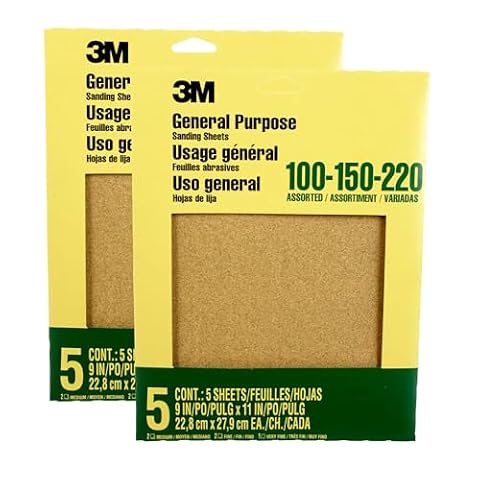
- Assorted grit pack for a furniture refresh
An assorted grit pack is useful for furniture refresh projects because different stages need different abrasives. Choose a pack with coarse, medium, and fine grits in the format your sander or hand-sanding work requires.
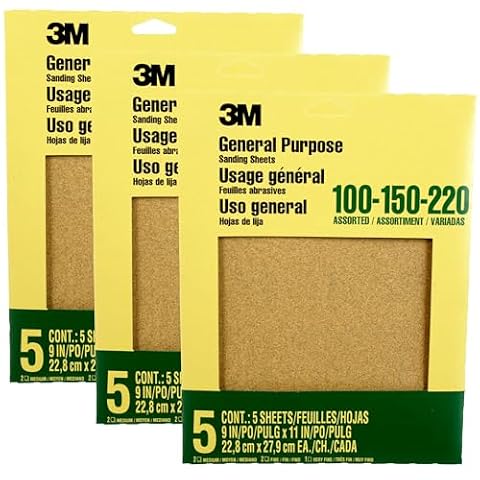
- Best starter pack: 80 120 180 220 sheets
An 80/120/180/220 grit sandpaper pack covers most basic wood preparation, paint, repair, and refinishing jobs. Here is what each grit does and how to use the set without skipping too far between grits.
Troubleshooting
- Abrasive cleaning stick for loaded paper
An abrasive cleaning stick can refresh sandpaper loaded with dust, resin, paint, or finish. Use it with the correct technique and replace the paper when the abrasive grains are worn or the backing is damaged.
- Disc flying off a random-orbit sander
A disc that flies off a random-orbit sander usually points to a worn or dirty hook-and-loop pad, a mismatched disc, damaged backing, or excessive sanding pressure. Unplug the tool, then work through these checks before replacing the sander.
- Grit scratches that will not sand out
Deep sanding scratches usually need a controlled grit progression rather than more pressure with the same paper. Learn how to identify the cause, remove the scratches, and avoid making them worse.
- Hook-and-loop discs not sticking: Causes and fixes
Hook-and-loop sanding discs usually stop sticking because the backing pad is packed with dust, the pad hooks are worn, or the disc and pad are incompatible. Check the pad and disc first, then inspect fit, heat, and tool setup.
- Hook-and-loop pad worn smooth
A hook-and-loop sanding pad that has become smooth usually cannot hold discs reliably. Learn how to check for packed-in dust, identify a worn pad, and choose the correct replacement.
- Paper loading immediately on pine pitch
If sandpaper loads immediately on pine pitch, the abrasive is usually heating and picking up softened resin rather than cutting cleanly. Clean the surface, use fresh clog-resistant paper, reduce pressure and heat, and change abrasives as soon as the surface becomes glazed.
- Sanding sponge tearing at the corners
A sanding sponge usually tears at the corners because the foam edge is catching on a sharp surface or receiving too much pressure. Check the abrasive, sanding technique, workpiece edges, and sponge condition before replacing it.
- Sandpaper clogging on paint
Sandpaper usually clogs on paint because the coating is soft, thick, uncured, or poorly matched to the abrasive. Use the right grit, lighter pressure, dust removal, and an open-coat or stearated abrasive to reduce loading.
- Sheet tearing in a 1/4 sheet sander
Sandpaper usually tears in a 1/4 sheet sander because it is loose, incorrectly positioned, clogged with dust, or catching on a damaged platen. Check the paper fit and clamps first, then inspect the pad, dust collection, and sanding technique.
- Stearated paper still gumming on finish
Stearated sandpaper usually gums because the finish is not fully cured, the abrasive is too fine or loaded, or heat and pressure are softening the coating. Use a fresh sheet, lighter pressure, better cure time, and the right abrasive for the finish.
- Wet-dry paper falling apart in water
Wet-dry sandpaper should resist water during wet sanding, but it can still soften, delaminate, or tear when it is soaked too long, folded sharply, overheated, or not truly waterproof. Here is how to identify the cause and avoid wasting paper.
Technique
- Abrasive leftover from 80 grit showing after stain
Stain often makes coarse sanding scratches, embedded grit, and uneven sanding much more visible. Here is how to identify the problem and repair it without making the finish worse.
- Sanding block and 220 sheets for between coats
A sanding block paired with 220-grit sheets is a reliable setup for smoothing raised grain and minor imperfections between finish coats without removing too much material.
- Stearated 220 for Between Varnish Coats
Stearated 220-grit sandpaper can be a useful between-coat abrasive because its coating helps reduce loading. Use it lightly on a fully dry varnish film, then remove all dust before recoating.
Use Cases
- Best Sponge for Painted Stair Spindles
The best sanding sponge for painted stair spindles is flexible enough to follow rounded profiles but firm enough to level drips and rough patches. For most repainting jobs, start with a medium-grit sponge and finish with a fine-grit option.
- Best wet-dry paper for automotive-style finish work
The right wet-dry paper depends on whether you are leveling imperfections, refining scratches, or preparing a cured finish for polishing. Here is how to choose grit and paper format without creating deeper scratches than necessary.
- Buying a sanding sponge set for primer and enamel
A useful sanding sponge set for primer and enamel should cover surface prep, between-coat smoothing, and final touch-ups without removing too much material. Here is how to choose the right grits, shapes, and abrasive types.
- Waterproof paper for wet-sanding a finish
Waterproof wet-and-dry sandpaper is the right choice for smoothing a cured finish with water or another compatible lubricant. Here is how to choose the abrasive, grit sequence, and sheet format without cutting through the finish.
- Wet-dry 400 to 800 pack
A 400 to 800 wet-dry sandpaper pack covers fine smoothing and finishing work on paint, clear coat, metal, plastic, and prepared wood. Here is what to check before buying.