Aluminum oxide is usually the best starting point for general wood sanding and paint preparation. Choose silicon carbide when you need a fine, sharp cut or wet-and-dry sanding, and choose ceramic when you need faster stock removal, longer abrasive life, or demanding power-sanding performance. The right choice also depends on grit, backing, bond, and whether you are sanding by hand or with a machine.
Choosing · Mon Sep 07
Aluminum oxide versus silicon carbide versus ceramic
Aluminum oxide is the versatile choice for most wood and paint sanding. Silicon carbide is better for fine finishing and wet sanding, while ceramic is the high-performance option for aggressive stock removal and demanding power-sanding work.
Quick comparison
| Abrasive | Best known for | Good choices for | Main limitation |
|---|---|---|---|
| Aluminum oxide | Versatility and consistent general-purpose sanding | Bare wood, between-coat sanding, painted surfaces, hand sanding, many power sanders | May wear faster than ceramic during aggressive sanding |
| Silicon carbide | Sharp cutting action and fine finishes | Wet sanding, automotive finishes, plastics, paint, between-coat work, hard surfaces | The abrasive can break down more quickly during heavy stock removal |
| Ceramic | Fast cutting and durability under pressure | Hard wood, heavy removal, hardwood flooring, metal, and high-use power sanding | Often unnecessary for light hand sanding and can remove material quickly |
These are general tendencies, not absolute rules. Product construction varies, so check the manufacturer’s stated applications before using a particular sheet, disc, or belt.
General-purpose wood and paint sanding
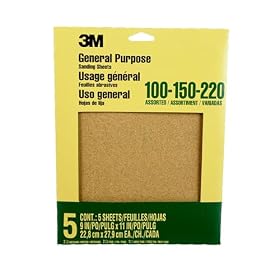 3M Aluminum Oxide Sandpaper, 5 Sheets, Assorted Grit 100-150-220, 9 x 11 in3M
$4.99 as of
View on Amazon 3M Sandpaper, 220 Grit, 5 Sheets, 9 x 11 in, Very Fine Aluminum Oxide3M
$5.37 as of
View on Amazon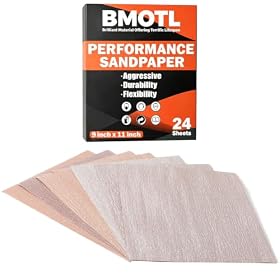 BMOTL Aluminum Oxide Sandpaper Sheets 9x11, 120-600 Assorted Grit 24 PackBMOTL
$9.99 as of
View on Amazon
Product prices and availability are accurate as of the date/time indicated and are subject to change. Any price and availability information displayed on Amazon.com at the time of purchase will apply to the purchase of this product.
Aluminum oxide: the all-purpose option
Aluminum oxide is the most broadly useful abrasive for common woodworking and refinishing tasks. It is available in sheets, discs, belts, sanding sponges, and other formats, making it easy to match with a hand block or power tool.
Use it for:
- Smoothing raw softwood and hardwood
- Removing old paint or finish
- Sanding between coats of finish
- Preparing wood for primer or paint
- General-purpose hand sanding
- Routine work with random-orbit, sheet, detail, or finishing sanders
Aluminum oxide grains gradually fracture during use, exposing fresh cutting edges. That helps the abrasive remain useful as it wears. For most home projects, a quality aluminum oxide product in the correct grit is a sensible default.
Choose aluminum oxide first when you do not have a specialized surface or unusually aggressive removal job. It is especially practical when you need several grits for a complete sanding sequence.
When aluminum oxide is not the best choice
A standard aluminum oxide sheet may be inefficient for very hard coatings, extensive material removal, or long power-sanding sessions. If the abrasive quickly becomes smooth, clogged, or ineffective, a ceramic product may be a better upgrade. For final wet sanding or very fine finishing, silicon carbide may leave a more suitable scratch pattern.
Wet-and-dry fine finishing
 3M Wetordry Sandpaper, 03006, Assorted Grits (1000, 1500, 2000, 2500), 3 2/3 in x 9…3M
$6.00 as of
View on Amazon 3M Wetordry Sandpaper, 03024, Assorted Grits, 3 2/3 in x 9 in, 5 Sheets Per…3M
$5.94 as of
View on Amazon
Product prices and availability are accurate as of the date/time indicated and are subject to change. Any price and availability information displayed on Amazon.com at the time of purchase will apply to the purchase of this product.
Silicon carbide: sharp cutting and fine finishing
Silicon carbide is a hard, sharp abrasive commonly used for fine finishing and wet-or-dry sanding. It is often found on black or dark-colored waterproof sheets, although color alone is not a reliable way to identify the abrasive.
Use silicon carbide for:
- Wet sanding cured finishes
- Smoothing paint, clear coat, and automotive finishes
- Fine sanding between finish coats
- Sanding plastics and other relatively hard surfaces
- Removing nibs, dust particles, and minor surface imperfections
- Hand sanding where a clean, fine scratch pattern matters
Silicon carbide is often a good choice when you want to use water or another approved lubricant to control dust and keep the surface cooler. Only wet sand when the abrasive, backing, finish, and workpiece are suitable for it. Water can damage unfinished wood, swell wood fibers, cause rust, or create problems beneath a coating.
Silicon carbide for wood
Silicon carbide can work well for fine sanding on sealed or finished wood, but it is not automatically the best abrasive for every bare-wood task. For initial leveling and removing milling marks, aluminum oxide or ceramic may work more efficiently. Use a suitable fine grit and light pressure when refining a finish rather than trying to remove large amounts of wood.
Aggressive power sanding
 AOZHONG 220 Grit, 6 in, 50 Pcs Ceramic Multi-Hole Sanding Disc, Hook and Loop, Premium…AOZHONG
$23.99 as of
View on Amazon KQCXIK 30 Pcs 6 Inch Ceramic Mesh Sanding Discs for Orbital Sander 60 GritKQCXIK
$21.99 as of
View on Amazon Benchmark Abrasives 5 Inch Sanding Discs Ceramic Resin Fiber Grinding Disc for Grinding, Stripping on…Benchmark Abrasives
$36.74 as of
View on Amazon
Product prices and availability are accurate as of the date/time indicated and are subject to change. Any price and availability information displayed on Amazon.com at the time of purchase will apply to the purchase of this product.
Ceramic: aggressive removal and longer working life
Ceramic abrasives are engineered for high cutting performance. They are commonly used in premium sanding discs, belts, and other products intended for power sanding or demanding removal work. Ceramic grains can fracture in a way that exposes new sharp edges as the abrasive works, helping the product maintain cutting performance under suitable pressure.
Use ceramic when you need to:
- Remove material quickly
- Strip a stubborn finish or coating
- Sand hard wood or hardwood flooring
- Level significant surface irregularities
- Reduce abrasive changes during a demanding project
- Perform heavy-duty sanding with a compatible power tool
Ceramic is not automatically better for every job. On a delicate veneer, soft wood, thin coating, or small hand-sanding task, its aggressive cutting can make it easier to remove too much material. Start with a finer grit, use light pressure, and keep the tool moving.
Ceramic abrasive considerations
Ceramic products often cost more than general-purpose abrasives, but the relevant comparison is not just the package price. Consider cutting speed, useful working life, how often you need to change the abrasive, and the cost of mistakes from removing too much material.
Ceramic products are most worthwhile when the job is large, the material is hard, or a less aggressive abrasive loads or wears too quickly. For occasional light sanding, aluminum oxide is often sufficient.
Which abrasive should you choose by task?
Sanding bare wood
Start with aluminum oxide for most bare-wood sanding. It offers a good balance of cutting ability, availability, and control. Ceramic can be useful for heavy leveling, hardwood, or removing a thick finish. Use silicon carbide mainly for fine finishing stages or special wet-sanding applications.
Removing paint or finish
For ordinary paint removal, aluminum oxide is a practical choice. Ceramic is a better candidate when the coating is stubborn or substantial material must be removed quickly. Avoid using an unnecessarily coarse or aggressive abrasive on veneer and thin wood surfaces.
Preparing wood for paint
Aluminum oxide is usually the most convenient choice for scuffing, smoothing filler, and preparing sound wood or an existing coating. The goal is a uniform surface, not maximum material removal. Silicon carbide may be useful for fine smoothing of a cured coating, provided wet or dry use is compatible with the surface.
Sanding between coats
Use fine aluminum oxide or silicon carbide, depending on the finish and the manufacturer’s instructions. Use light pressure. Between-coat sanding is intended to remove dust nibs and improve adhesion, not to cut through the coating.
Wet sanding
Silicon carbide is the usual choice for wet-and-dry sanding. Confirm that the product is labeled for wet use, and protect nearby electrical equipment from water. Do not assume that a paper sheet is waterproof merely because it looks dark or has a similar appearance to wet/dry paper.
Sanding metal
Ceramic can be useful for aggressive metal sanding with a compatible product and tool. Silicon carbide is often selected for fine finishing or specialized metal work. Aluminum oxide is also widely used, but the correct abrasive depends on the metal, coating, tool, heat control, and required finish. Follow the abrasive and tool manufacturer’s safety guidance.
Sanding plastic
Silicon carbide can be a good option for fine work on plastic because it cuts sharply. Use a fine grit, light pressure, and frequent inspection. Excessive friction can soften, smear, or reshape some plastics.
Grit still matters more than the grain name
Abrasive type does not replace grit selection. A coarse ceramic product can remove far more material than a fine aluminum oxide product, while a fine silicon carbide product may be better for polishing or finish refinement.
A practical sequence is to begin with the least aggressive grit that can accomplish the task, then progress through intermediate grits rather than jumping directly to a very fine abrasive. Remove the scratches from the previous grit before moving on. The exact grit range depends on the wood, coating, tool, and desired finish.
When changing abrasive types, do not assume that the same grit number will produce exactly the same result. Compare the surface rather than relying only on the printed number, and make a test pass in an inconspicuous area when the finish matters.
Other specifications that affect the choice
Backing material
Paper backing is common for hand sanding and lighter work. Cloth backing is generally more flexible and durable for products such as belts and heavy-duty discs. Film backing can provide a flatter, more consistent surface for some fine-finishing applications. The abrasive grain alone does not determine how a product performs.
Coating and loading resistance
Open-coat or stearated products can help reduce clogging on some wood, paint, and filler applications. No-load products are not clog-proof, and they are not suitable for every finish. A clogged sheet may scratch poorly even when the abrasive grain itself is still sharp.
Product format
Choose a sheet, disc, belt, or sponge that matches the tool and sanding area. A high-performance grain in the wrong format will not work correctly. Confirm the disc diameter, hole pattern, attachment system, belt dimensions, or sheet size before buying replacement abrasives.
Hand sanding versus power sanding
Power tools remove material faster and generate more heat, so use an abrasive and grit intended for the tool. Keep the sander moving, avoid excessive downward pressure, and use dust extraction when compatible. For delicate edges, profiles, and small repairs, hand sanding may provide better control than a powerful ceramic disc.
A simple buying decision
Choose aluminum oxide if you need one versatile abrasive for general wood sanding, paint preparation, and routine refinishing.
Choose silicon carbide if you need wet-and-dry paper, fine finish sanding, or a sharp abrasive for paint, plastic, or hard-surface refinement.
Choose ceramic if you need aggressive removal, are sanding hard material, or want a power-sanding abrasive that can maintain cutting performance during demanding work.
If the surface is valuable, thin, veneered, or already close to finished, prioritize control over speed. Begin with a less aggressive product and a finer grit, then increase aggressiveness only if the abrasive is not removing enough material.
Safe sanding practices
Wear eye protection and a suitable dust mask or respirator selected for the material being sanded. Use dust collection or ventilation where appropriate, and follow the coating manufacturer’s precautions—especially when removing old paint or unknown finishes. Inspect discs, sheets, and belts for damage before use, and follow the power tool and abrasive manufacturer’s instructions for speed, attachment, and operating technique.
Do not use a sanding product outside its stated application, and disconnect or secure power equipment before changing an abrasive. If old coatings may contain lead or another hazardous substance, stop and follow applicable testing, containment, and disposal guidance rather than sanding casually.
FAQ
Is aluminum oxide or silicon carbide better for wood?
Aluminum oxide is usually the better general-purpose choice for bare wood, paint preparation, and routine woodworking. Silicon carbide is more useful for fine finishing or wet sanding, especially on cured coatings and other hard surfaces.
Is ceramic sandpaper better than aluminum oxide?
Ceramic can be better for aggressive material removal, hard wood, and demanding power-sanding jobs. Aluminum oxide is often the better value and easier-to-control choice for ordinary hand sanding, between-coat sanding, and light refinishing.
Can silicon carbide sandpaper be used wet on wood?
Only if the product is labeled for wet use and the wood, coating, and process can tolerate water. Water can swell unfinished wood, damage some finishes, and contribute to rust or adhesion problems.
Which abrasive lasts the longest?
There is no universal answer because useful life depends on the material, grit, pressure, heat, loading, backing, and tool. Ceramic is often selected for demanding work because it can maintain aggressive cutting, while aluminum oxide is suitable for many routine jobs.
Can I use ceramic sandpaper for between-coat sanding?
You can use a fine ceramic product if it provides the needed control, but it is often more aggressive than necessary. Fine aluminum oxide or silicon carbide is commonly easier to control for lightly scuffing a cured finish.