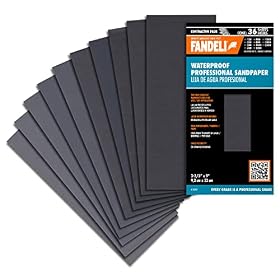
Wet-dry sandpaper should resist water during wet sanding, but it can still soften, delaminate, or tear when it is soaked too long, folded sharply, overheated, or not truly waterproof. Here is how to identify the cause and avoid wasting paper.
Wet-dry paper falling apart in water usually means the sheet is being over-soaked, folded or scrubbed too aggressively, exposed to heat, or is not actually waterproof abrasive paper. Genuine wet-dry sandpaper should remain usable when damp, although the backing may become more flexible. If the abrasive layer separates or the sheet dissolves quickly, stop using it and check the paper, water, and sanding method.
Check the paper first
Not every dark-colored or fine-grit sheet is made for wet sanding. Standard dry sandpaper can lose strength rapidly in water because its paper backing, adhesive, and abrasive bond are not designed for moisture.
Look for packaging that specifically says wet and dry, waterproof, or wet sanding. A sheet labeled only for dry sanding should not be assumed to be water-resistant.
Also check whether the paper has been stored in a damp location. Long-term moisture exposure can weaken the backing and adhesive before the sheet is used. Old or poorly stored paper may show curled edges, bubbles, flaking abrasive, or a brittle feel when dry.
If a new sheet begins delaminating almost immediately in clean water, the most reasonable next step is to replace it with paper clearly labeled for wet sanding rather than trying to reinforce the damaged sheet.
Avoid soaking it longer than necessary
Wet-dry paper is designed to work while damp or briefly wetted, not necessarily to sit submerged for hours. Excessive soaking can soften the backing and weaken the bond between the abrasive coating and the paper or film.
Try this process instead:
Cut only the piece you need.
Wet the sheet or the work surface with clean water.
Allow it to absorb moisture briefly until flexible.
Sand with light, even pressure.
Rinse away slurry as it builds up.
Discard the sheet when the abrasive is worn or the backing starts separating.
For many jobs, a spray bottle, damp sponge, or shallow tray works better than leaving a full sheet submerged. Follow the paper manufacturer's instructions if they specify a soaking time.
Product prices and availability are accurate as of the date/time indicated and are subject to change. Any price and availability information displayed on Amazon.com at the time of purchase will apply to the purchase of this product.
Check how the sheet is being folded
Sharp folds and tight creases can split the backing, especially after the paper has softened. Once water reaches a damaged edge or crease, the sheet may tear or separate quickly.
Use a sanding block or flexible backing pad when possible. Wrap the paper around the block without sharply creasing it, and trim away torn edges. For hand sanding around curves, use a loose fold with a broad contact area rather than pinching one corner between your fingers.
A sanding sponge may be a better choice for contoured surfaces or edges where a flat sheet repeatedly cracks.
Product prices and availability are accurate as of the date/time indicated and are subject to change. Any price and availability information displayed on Amazon.com at the time of purchase will apply to the purchase of this product.
Reduce heat and pressure
Wet sanding should not require heavy pressure. Excessive force creates friction and heat, which can weaken the adhesive and make the softened sheet tear. It can also clog the abrasive with paint, finish, or material slurry.
Use short, controlled strokes and let the abrasive do the cutting. Keep the surface damp, but do not flood areas where water could reach electrical equipment or unfinished joints. If the paper becomes hot, curls, or sheds abrasive, stop and replace it.
For machine sanding, use only paper or discs approved for that tool and application. Hand-use wet-dry sheets should not be attached to a power sander unless the manufacturer specifically permits it.
Product prices and availability are accurate as of the date/time indicated and are subject to change. Any price and availability information displayed on Amazon.com at the time of purchase will apply to the purchase of this product.
Clean the water and surface
Dirty or contaminated water can make paper appear to fail prematurely. Solvents, cleaners, oils, uncured finishes, and aggressive chemicals may attack the adhesive or backing. Grit from earlier sanding can also cut through the sheet.
Use clean water unless the abrasive manufacturer gives different instructions. Change the water when it becomes heavily loaded with dust or finish. Remove loose debris from the workpiece before sanding so sharp particles do not tear the sheet.
If you are sanding automotive paint, metal, or a cured coating, confirm that the paper is suitable for that material. Some wet-sanding jobs generate more heat or clogging than ordinary wood finishing.
Tell normal softening from actual failure
Wet-dry paper normally becomes more flexible when wet. That is not necessarily a defect. It is failing when you see one or more of these symptoms:
The abrasive coating flakes off in patches.
The backing splits with light hand pressure.
The sheet separates into layers.
The edges dissolve or become pulpy.
The abrasive turns smooth almost immediately.
The paper leaves loose fibers or adhesive on the workpiece.
A flexible sheet that stays intact and cuts evenly is generally behaving normally. A sheet that disintegrates in clean water should be replaced.
When to change the format
Choose a different sanding format if the problem is caused by the job rather than the paper itself:
Flat surfaces: Wet-dry sheets on a sanding block provide more even pressure.
Curves and profiles: A wet-compatible sanding sponge can conform better without sharp folds.
Large areas: Wet-dry discs may be more efficient, but verify that the disc and sander are designed for wet use before introducing water.
Small detail work: Cut sheets into manageable pieces so you do not repeatedly bend or soak an entire sheet.
Do not use water around a powered sander, cord, battery, outlet, or exposed electrical connection unless the equipment is specifically rated and the manufacturer permits that method. When in doubt, use dry sanding and suitable dust control instead.
When replacement is the right next step
Replace the paper when it delaminates in clean water, sheds abrasive during light sanding, or has been damaged by a sharp crease, solvent, heat, or prolonged soaking. A new sanding block or sponge is worthwhile when the backing repeatedly tears because of the workpiece shape.
If several sheets from the same package fail in the same way, stop using that package and contact the seller or manufacturer with the product details and batch information. If only one sheet fails while the others remain intact, the sheet may have been damaged during cutting, storage, or handling.
FAQ
Is wet-dry sandpaper supposed to be soaked in water?
It can usually be wetted or briefly soaked, but the exact method depends on the product. Prolonged soaking can soften the backing and weaken the adhesive, so follow the manufacturer's instructions and use only enough water to keep the surface damp.
Why does my waterproof sandpaper still fall apart?
Possible causes include excessive soaking, sharp folds, heavy pressure, heat from friction, contaminated water, chemical exposure, poor storage, or a defective sheet. If it separates quickly in clean water with light handling, replace the paper.
Can I use regular sandpaper for wet sanding?
No. Standard dry sandpaper may lose its abrasive coating or backing strength when wet. Use paper specifically labeled wet and dry, waterproof, or suitable for wet sanding.
Can I use wet-dry sandpaper on a power sander?
Only if the tool, abrasive, and sanding method are specifically approved for wet use. Water and electrical equipment create a serious shock hazard. Otherwise, use the sander dry with the correct compatible abrasive and dust-control method.