
Green film discs versus paper discs
Green film and paper sanding discs can use similar abrasive grits, but their backings behave differently. Choose film for durability and…
Help choosing sandpaper grit and format for wood, paint and refinishing jobs.
Green film and paper sanding discs can use similar abrasive grits, but their backings behave differently. Choose film for durability and…

Mesh abrasive and paper sandpaper can both work on painted surfaces, but they behave differently. Mesh is usually the better choice for…

Stearated finish paper resists loading better than plain woodworking paper, but it is not ideal for every surface. Here is how to choose…

Paper used on a flat sharpening board needs to stay secure and flat against the tool edge. Cabinet sandpaper is chosen for sanding wood…

Abrasive pads can replace 320-grit paper for scuffing, cleaning, and between-coat finishing, but they do not cut in exactly the same way.…

Chemical stripper can remove thick paint without aggressively grinding into the surface. Here is when it makes sense, how to use it safely,…
Hand sanding gives you control around edges, profiles, and final finish work, while a random-orbit sander removes material faster from…

For a cupped board, a hand plane is often faster than sandpaper for removing the high areas. Sanding can work too, but use a long, rigid…

Use a sharp card scraper to remove glue, tearout, or small surface irregularities with control. Reach for 80-grit sandpaper when you need…

A chemical deglosser can reduce the need to sand sound, glossy paint, but it won’t smooth rough spots or repair peeling. Choose based on…

A shop sander can smooth a tabletop efficiently, but it may not flatten a warped top or safely handle every size and material. Confirm the…

If sanding with paper feels slow, a belt sander may seem like the obvious upgrade—but it can remove material too quickly. First check the…
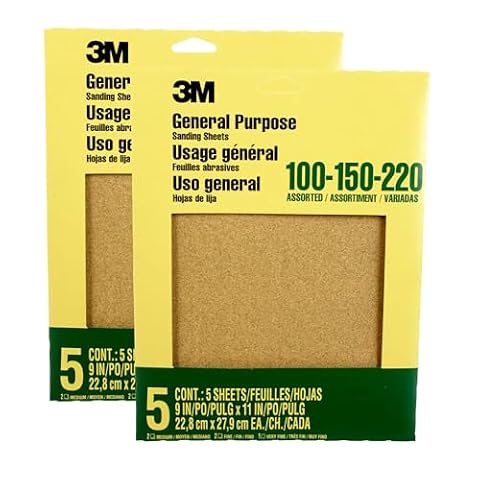
Full 9x11 sandpaper sheets offer flexibility and lower waste when you need custom sizes, while pre-cut 1/4 sheets save time and fit common…

A dual-grit abrasive sponge saves space and makes grit changes convenient, while two separate sponges offer cleaner grit control and less…

A cork-backed sanding block is usually the better choice for hand-sanding wood and finishing coats, while a cheap plastic block can be…
A detail sanding sponge is more forgiving on contoured surfaces, while a sanding stick offers a narrower, more rigid sanding surface for…
Foam-backed and paper sanding discs can use similar abrasive grits, but their backings behave differently. Choose foam for flexibility and…
Hook-and-loop discs are easier to change and reuse, while PSA discs can provide a secure, low-profile bond. The right choice depends on…

For a rounded edge, a sanding sponge usually conforms more smoothly and is less likely to create flat spots, while folded paper offers…

