Chemical stripper is often a better alternative to grinding through paint when the coating is thick, layered, detailed, or covering wood that could be gouged by an aggressive abrasive. Apply the stripper according to its label, remove the softened coating with a scraper, then use sandpaper to smooth the remaining residue and prepare the surface for a new finish.
Comparisons · Mon Sep 07
Chemical stripper instead of grinding through paint
Chemical stripper can remove thick paint without aggressively grinding into the surface. Here is when it makes sense, how to use it safely, and what sanding comes next.
When chemical stripper makes more sense than grinding
Grinding or aggressive power sanding can remove paint quickly, but it also creates heat, dust, and a real risk of cutting into the material underneath. A chemical stripper is worth considering when:
- The paint has several thick layers.
- The surface has carvings, trim, grooves, or other details.
- You are working on wood that could be damaged by coarse abrasives.
- The coating is difficult to remove evenly with a sander.
- You need to avoid spreading large amounts of dry paint dust.
Stripper is particularly useful for removing old finish from furniture, doors, moldings, and other irregular surfaces. It is less attractive when the coating is thin and a controlled sanding pass can remove it without damaging the substrate.
Chemical stripping does not usually eliminate sanding. It changes sanding from a heavy paint-removal step into a lighter cleanup and surface-preparation step.
Coarse sandpaper for remaining paint residue
 Fandeli Sandpaper Sheets - Multipurpose Professional 60 Grit Sand Paper (25 Sheet Pack) - Sandpaper…Fandeli
$18.17 as of
View on Amazon
Product prices and availability are accurate as of the date/time indicated and are subject to change. Any price and availability information displayed on Amazon.com at the time of purchase will apply to the purchase of this product.
How to use stripper before sanding
1. Identify the surface and coating
Check whether the material is solid wood, veneer, metal, masonry, or a composite. A stripper that is suitable for one surface may stain, soften, or damage another. Read the product label before applying it, especially if the surface has a factory finish, plastic parts, glue joints, or a delicate veneer.
On older painted surfaces, test for lead before disturbing the coating. Do not dry-sand or grind suspected lead paint. Follow applicable local requirements for containment, protective equipment, and disposal, or hire a qualified lead-safe professional.
2. Prepare a small test area
Apply the stripper to an inconspicuous spot first. The test should answer three questions:
- Does it soften the paint adequately?
- Does it discolor or damage the surface?
- Can the loosened coating be removed without excessive scraping?
Some coatings need more than one application. Do not assume that a longer dwell time is safe; follow the label’s instructions instead.
3. Protect the work area
Use the ventilation, gloves, eye protection, and other protective equipment specified on the product label. Protect nearby finished surfaces and the floor from drips. Keep chemical strippers away from flames, sparks, food-preparation areas, and children or pets.
Do not mix stripper with other chemicals or pour residue down a drain. Collect softened paint and used materials as directed by local disposal rules.
4. Scrape softened paint carefully
Use a scraper suited to the surface. Keep the tool relatively flat and use controlled pressure rather than digging into the material. A plastic scraper can reduce the chance of scratching delicate surfaces, while a sharper metal scraper may be appropriate for a durable, flat surface if the label and substrate allow it.
For grooves and profiles, use a tool that fits the shape without cutting into the edges. Wipe or collect residue as you work instead of letting it dry back onto the surface.
Hand sanding option for edges and details
 12Pcs Sanding Block Sponge Set, Reusable Sandpaper for Wood & DrywallLunirve
$8.99 as of
View on Amazon 3M Pro Grade Precision 3-in-1 Sanding Sponge, 180 Grit Medium, 2 Sponges, Washable & Reusable,…3M
$9.43 as of
View on Amazon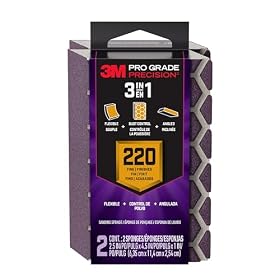 3M Pro Grade Precision 3-in-1 Sanding Sponge, 220 Grit Fine, 2 Sponges, Washable & Reusable,…3M
$9.99 as of
View on Amazon
Product prices and availability are accurate as of the date/time indicated and are subject to change. Any price and availability information displayed on Amazon.com at the time of purchase will apply to the purchase of this product.
Sanding after chemical stripping
Once the coating has been removed and the surface is clean and dry as directed by the stripper manufacturer, sand only as much as necessary.
Choosing the abrasive
- Coarse sandpaper: Useful for stubborn residue or uneven patches, but it can leave deep scratches and should not be the automatic first choice on wood.
- Medium sandpaper: Often suitable for smoothing remaining paint traces and leveling minor scraper marks.
- Fine sandpaper: Used for final smoothing before primer, paint, or clear finish.
- Sanding sponges or blocks: Helpful on flat areas, edges, and small details where controlled hand sanding is more important than speed.
- Abrasive discs: Useful for larger, durable surfaces when the coating residue is thin and the tool can be kept under control.
The exact grit sequence depends on the surface and the next finish. Start with the least aggressive abrasive that removes the remaining residue. If the paper clogs quickly, stop and check whether the surface still contains stripper or softened coating instead of immediately switching to a much coarser grit.
Sand with the grain on wood. Avoid rounding edges, thinning veneer, or creating low spots. Remove sanding dust using a method approved for the coating and finish system; a final wipe or vacuuming step may be required before priming.
Abrasive discs for flat surfaces
 POTUINOM 165 PCS 5 Inch Sanding Discs Random Orbital Sander SandpaperPOTUINOM
$19.99 as of
View on Amazon 52 Pack 5 Inch 8-Hole Hook and Loop Sanding Discs Sandpaper Red Round 80 Grit…NOOKEYA
$7.59 as of
View on Amazon S SATC 72 PCS 5 Inch 8 Hole Hook and Loop Adhesive Sanding Discs Sandpaper…S SATC
$9.99 as of
View on Amazon
Product prices and availability are accurate as of the date/time indicated and are subject to change. Any price and availability information displayed on Amazon.com at the time of purchase will apply to the purchase of this product.
When grinding or sanding is still the better option
Chemical stripper is not automatically the best method. Controlled sanding may be more practical when:
- The paint is a thin, stable layer.
- The surface is flat and durable.
- You need to remove only a small damaged area.
- Chemical residue would be difficult to manage.
- The coating is incompatible with the available stripper.
- The project requires a clean, predictable surface and the substrate tolerates sanding.
For metal, a suitable abrasive method may be faster for removing light surface coating or rust, but avoid overheating thin metal. For wood, aggressive grinding is usually a poor choice unless the tool, abrasive, and technique are appropriate for the job.
Fine paper for final surface preparation
 240 Pcs Sanding Paper Assortment Pack, 12 Grits 80 to 2000 Sandpaper Kit with Mini…mozeeda
$14.99 as of
View on Amazon Norton Sandpaper, ProSand Premium 400 Grit Sand-Paper, Fine Sandpaper for Metal and Wood, Pack of…Norton
$17.44 as of
View on Amazon
Product prices and availability are accurate as of the date/time indicated and are subject to change. Any price and availability information displayed on Amazon.com at the time of purchase will apply to the purchase of this product.
Common problems and fixes
The stripper barely softens the paint
The product may not be compatible with the coating, the layer may be unusually thick, or the application may have dried before it worked. Check the label, apply a thicker or more suitable coat if permitted, and allow the stated dwell time. Use a test patch before treating the whole surface.
Paint comes off, but a sticky film remains
Do not sand aggressively through the film. Follow the manufacturer’s cleanup instructions and allow the surface to dry or neutralize as directed. Sanding while residue remains can clog the paper and spread the coating across the surface.
Sandpaper clogs immediately
The paint or stripper residue may still be soft. Stop, clean the surface according to the product instructions, and wait until it is ready for sanding. Once the residue is dry, use fresh paper and light pressure.
Scraper marks appear in the surface
Reduce pressure, use a sharper or more suitable scraper, and keep it flatter. Minor marks can often be smoothed with progressive sanding, but deep gouges may require filling or additional repair before refinishing.
The coating will not come off evenly
Use smaller sections and keep the stripper wet for the label-specified working time. Multiple thin applications may work better than one rushed pass. On complicated trim, careful hand scraping and sanding may be more controllable than a power tool.
Bottom line
Choose chemical stripper instead of grinding when thick or layered paint covers a surface that could be gouged, overheated, or damaged by aggressive sanding. Use a test patch, follow the label’s safety and cleanup directions, scrape carefully, and finish with the least aggressive sandpaper that produces the required surface. For thin paint on a flat, durable substrate, controlled sanding may be simpler and safer than introducing chemicals.
FAQ
Does chemical paint stripper replace sanding?
Usually not. Stripper removes or softens most of the coating, while sanding smooths leftover residue, scraper marks, and the surface before primer or finish.
Is chemical stripper safer than grinding paint?
It can reduce dry paint dust, but it introduces chemical exposure, fumes, and contaminated waste. Use the product label’s ventilation and protective-equipment instructions, and test older paint for lead before disturbing it.
What grit should I use after stripping paint?
Use the least aggressive grit that removes the remaining residue without damaging the substrate. Medium grit is often a useful cleanup starting point, followed by finer paper for final preparation, but the appropriate sequence depends on the material and finish.
Why is my sandpaper clogging after paint stripping?
The surface may still contain soft paint or stripper residue. Stop sanding, clean or neutralize the surface as directed by the stripper manufacturer, let it reach the required condition, and then use fresh abrasive paper.
When should I avoid chemical stripper?
Avoid it when the product is incompatible with the surface, ventilation and waste handling cannot be managed, or a thin coating can be removed safely with controlled sanding. Be especially cautious with veneer, plastics, unknown coatings, and older paint that may contain lead.