Paying a Shop to Drum-Sand a Tabletop: What to Know
A shop sander can smooth a tabletop efficiently, but it may not flatten a warped top or safely handle every size and material. Confirm the machine, the goal, and the thickness it will remove before approving the job.
Paying a shop to drum-sand a tabletop
Paying a shop to sand a tabletop can make sense when the top is too wide for your tools, has a lot of surface to smooth, or needs more even sanding than you can manage by hand. First confirm what the shop means by “drum-sand”: a drum or wide-belt sander can smooth and remove material, but it is not automatically the right way to flatten a warped tabletop.
What shop drum-sanding can—and cannot—do
A stationary drum sander feeds the work past an abrasive drum. A wide-belt sander works on a similar principle with a broader sanding belt. Either can remove material more consistently than hand-sanding when the machine and workpiece are a good match.
The machine’s usable width matters: the tabletop must fit through the machine, and the shop needs a safe way to support it. A large tabletop may need a different machine or process. Ask whether the shop will sand the top as one piece or whether it must be disassembled.
Sanding is also different from flattening. A sander follows the surface as it removes material; it may smooth a top without correcting a substantial cup, twist, or uneven joint. If the top needs to be truly flat, ask whether the shop can assess and flatten it, and what process that requires. Don’t assume drum-sanding alone will do that.
Product prices and availability are accurate as of the date/time indicated and are subject to change. Any price and availability information displayed on Amazon.com at the time of purchase will apply to the purchase of this product.
When paying a shop makes sense
Consider a shop if:
The top is too large to handle comfortably with your own sander.
You need a broad, consistent surface and the shop confirms the top fits its equipment.
Removing old finish across the whole top would be slow or difficult with your tools.
You want a professional to assess a glued-up or uneven top before sanding.
Doing it yourself may be more practical if the top is small, already reasonably flat, and only needs light finish preparation. A random-orbit sander with suitable abrasives can handle many modest sanding jobs, though it takes care to avoid swirls, dips, and uneven edges.
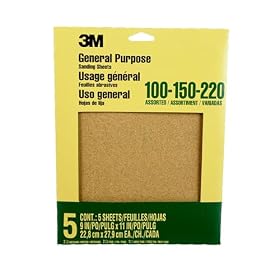
Hand-sanding abrasive for tabletop edges and touch-ups
Product prices and availability are accurate as of the date/time indicated and are subject to change. Any price and availability information displayed on Amazon.com at the time of purchase will apply to the purchase of this product.
What to ask before approving the work
Give the shop the tabletop’s length, width, thickness, material, and whether it is solid wood, veneer, or a glued-up panel. Mention any existing finish, repairs, metal fasteners, glue squeeze-out, or areas that must not be removed. If you’re unsure whether the top is veneered, say so before work begins.
Ask these questions:
What machine and process will you use, and can the whole top pass through safely?
Are you smoothing the surface, removing finish, or trying to flatten it?
How much material might be removed, and what thickness will remain?
What abrasive grit will you finish with, and will the surface be ready for my planned finish?
Can you preserve the edges, profile, and any details that should not be sanded?
A thin top or veneer deserves particular caution. Aggressive sanding can cut through veneer or remove more material than intended. Agree on the goal and acceptable material removal before the shop starts.
Prepare the tabletop and plan the finish
Remove legs, hardware, and anything that could catch in the machine. Tell the shop about hidden fasteners or repairs; do not assume they will be visible. Follow the shop’s instructions for delivery and pickup, especially for a heavy or oversized top.
Before sanding, decide what finish will go on afterward. The appropriate final grit depends on the wood, the finish, and the finish maker’s instructions. Ask the shop to confirm that its final sanding step suits that finish; sanding finer is not automatically better, since some finishes need a particular surface texture to adhere or absorb evenly.
Inspect the top in good light when you pick it up. Look for missed areas, unwanted changes to the edge, and any remaining low spots if flatness was part of the agreed work. If the result is not what you discussed, contact the shop before applying finish, which can make corrections harder.
FAQ
Can a drum sander flatten a warped tabletop?
It can smooth a surface, but sanding does not necessarily correct a cup, twist, or uneven panel. Ask the shop whether it can flatten the top and what process it plans to use.
Can a shop drum-sand a veneered tabletop?
Possibly, but veneer can be thin and easy to sand through. Tell the shop the top may be veneered and ask whether its process is appropriate before authorizing work.
Should I remove the tabletop from its base before taking it to a shop?
Usually it is easier to handle as a separate top, but check with the shop first. It may have specific requirements for safe support, transport, or disassembly.
What grit should the shop use on a tabletop?
There is no single right final grit for every top. It depends on how much material must be removed, the wood, and the finish you plan to apply. Ask the shop to match its final sanding step to the finish instructions.