Mesh sanding discs are a practical alternative when ordinary sandpaper clogs quickly, especially during drywall, primer, painted wood, and finish-removal work. Their open mesh construction gives dust more paths to travel through the abrasive and into a connected dust extractor. The tradeoff is that mesh discs usually cost more, require compatible hook-and-loop backing, and still need the correct grit and sanding technique.
Choosing · Mon Sep 07
Mirka-style mesh as an alternative to clogging paper
Mesh sanding discs can reduce clogging and improve dust extraction compared with ordinary paper, but they are not the right choice for every sanding job. Here is how to decide when the switch makes sense.
How mesh sanding differs from paper
Traditional paper-backed abrasives place the abrasive grains on a mostly solid backing. Dust can collect between the grains, where it mixes with resin, paint, finish, or soft wood fibers. This creates loading: the disc looks intact but cuts poorly.
Mesh abrasives use a net-like backing with abrasive material distributed across the mesh. Dust can pass through the openings rather than remaining on the sanding surface. With a random orbital sander and effective dust extraction, this can help keep the abrasive cutting more consistently.
Mesh does not make clogging impossible. Wet finishes, gummy paint, heavy pressure, and poor dust collection can still load the abrasive.
Mesh discs for random orbital sanders
 KQCXIK 50 Pcs 5 Inch Mesh Sanding Disc Assortment for Random Orbital SanderKQCXIK
$16.49 as of
View on Amazon KQCXIK 50 Pcs 5 Inch Mesh Sanding Disc for Random Orbital Sander 80 GritKQCXIK
$17.99 as of
View on Amazon 6 Inch Mesh Sanding Discs 50 PCS, 80/120/180/240/320 Grit Assortment, Dust Free Hook and Loop…Huzeew
$9.99 as of
View on Amazon
Product prices and availability are accurate as of the date/time indicated and are subject to change. Any price and availability information displayed on Amazon.com at the time of purchase will apply to the purchase of this product.
When mesh is a good alternative
Consider mesh discs or sheets when you regularly experience one or more of these problems:
- Paper discs become covered with dust or finish after a short time.
- You are sanding drywall compound, primer, paint, or other fine powdery materials.
- You want better dust control while using a random orbital sander.
- You sand large surfaces where changing clogged paper repeatedly is inefficient.
- You need an abrasive that can be cleaned more easily between uses.
Mesh is often most useful during surface preparation and refinishing, where dust buildup affects both sanding speed and the quality of the surface.
Mesh abrasive sheets for hand sanding
 SCOTTCHEN Drywall Sanding Screen Mesh Sheet 4-3/16" x 11-1/4" Grit #80,120,220-18pcsSCOTTCHEN
$12.99 as of
View on Amazon 20Pcs 4-3/16"x11-1/4 Drywall Sanding Screen, 80 Grit Mesh SandpaperHZXBGF
$11.99 as of
View on Amazon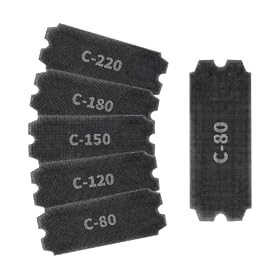 25-Pack Drywall Sandpaper 80-220 Grit, Dual-Sided Sanding SheetsEcoxyGoing
$10.99 as of
View on Amazon
Product prices and availability are accurate as of the date/time indicated and are subject to change. Any price and availability information displayed on Amazon.com at the time of purchase will apply to the purchase of this product.
When ordinary paper may still be the better choice
Paper abrasives remain useful for many jobs. They may be the sensible option when:
- You need a low-cost abrasive for a short job.
- The sander or hand-sanding tool does not have a compatible hook-and-loop backing pad.
- You are sanding an edge, corner, or profile where a mesh disc could catch or tear.
- You need a specific sheet, narrow strip, or specialty abrasive format.
- Dust extraction is unavailable or ineffective.
For hand sanding, a conventional sheet, sanding sponge, or sanding block may be easier to control than a mesh disc. Mesh is not automatically better simply because it is more open.
Dust-extraction accessories for sanding
 Vacuum Hose Adapter for Dewalt Sanders to 27mm Festool Hose - Dust Collection - Galactic…Galactic Gadgets
$20.99 as of
View on Amazon
Product prices and availability are accurate as of the date/time indicated and are subject to change. Any price and availability information displayed on Amazon.com at the time of purchase will apply to the purchase of this product.
Check compatibility before buying
Match the diameter and attachment
A mesh disc must match the sander’s disc diameter and attachment system. Most random orbital sanders use hook-and-loop discs, but the diameter and hole pattern can vary. The disc should sit flat on the backing pad without overhanging.
Match the dust-hole pattern
Some mesh discs are designed to work with the sander’s dust-extraction holes, while others are less dependent on a specific hole layout. Confirm the abrasive is intended for your sander and backing pad. A mismatch can reduce extraction and leave dust on the work surface.
Use a sound backing pad
A worn, warped, or damaged backing pad can cause uneven sanding even when the abrasive is good. Replace a pad that has lost its hook material, no longer holds the disc securely, or has a damaged edge.
Consider a pad protector
A mesh-compatible interface or pad protector can help protect the sander’s backing pad from wear. Use only accessories that are compatible with the abrasive and sander; adding an extra layer can affect hole alignment, sanding height, and disc retention.
Choose the grit for the job
Mesh construction does not replace grit selection. Start with the least aggressive grit that will remove the existing defect or coating, then move through progressively finer grits.
- Coarse grits: Remove material, level uneven areas, or strip stubborn finish. They can leave deep scratches and should be used carefully.
- Medium grits: Smooth rough wood, blend repairs, and prepare many painted surfaces for the next step.
- Fine grits: Refine scratches, prepare between coats, and improve the surface before final finishing.
The exact grit sequence depends on the coating, wood species, finish, and desired result. Avoid jumping directly from a very coarse abrasive to a fine one; the finer abrasive may not remove the deeper scratches efficiently.
How to get the most from mesh abrasive
- Use dust extraction when possible. Connect the sander to a suitable dust extractor or shop vacuum, following the tool and extractor instructions.
- Keep the sander flat. Tilting the tool concentrates pressure on the disc edge and can damage the abrasive or round over the workpiece.
- Use light, even pressure. Excessive pressure can reduce cutting performance, increase heat, and encourage loading.
- Keep the sander moving. Staying in one spot can create depressions or uneven scratch patterns.
- Inspect the surface and abrasive regularly. Replace a disc when the abrasive is worn, torn, glazed, or no longer cuts effectively.
- Clean only as directed. If the manufacturer permits it, gently remove loose dust from the abrasive. Do not use a cleaning method that damages the mesh or embeds debris in it.
Troubleshooting mesh that still clogs
Check the material first
Soft paint, uncured filler, resinous wood, and finishes that have not fully hardened can clog nearly any abrasive. Allow coatings and fillers to cure according to the product instructions before sanding.
Reduce pressure and heat
If the disc feels hot or the surface becomes gummy, lighten your pressure and keep the sander moving. A coarse disc used with heavy pressure can generate heat and worsen loading.
Inspect extraction and airflow
Empty a full vacuum canister or bag, check the hose for restrictions, and inspect the sander’s dust ports. A blocked hose, poorly fitting adapter, or clogged filter can leave dust on the disc instead of pulling it through.
Confirm the disc is seated correctly
Remove the disc and check for folds, torn areas, or debris on the hook-and-loop pad. Refit it so it is centered and fully attached. A disc that is not flat can sand unevenly and wear prematurely.
Replace the abrasive when it is worn
A mesh disc may still look usable after its cutting edges are worn away. If cleaning and correct technique do not restore performance, replacement is more practical than continuing to press harder.
Is mesh worth the extra cost?
Mesh is most likely to justify its higher purchase cost when it saves frequent disc changes, improves dust collection, or produces more consistent cutting during large sanding jobs. For occasional hand sanding or small repairs, ordinary paper may remain the more economical choice.
Choose mesh when reduced loading and dust flow are priorities. Choose paper, sheets, sanding sponges, or blocks when the job depends more on low cost, edge control, unusual shapes, or a format your tool already supports.
FAQ
Does mesh sandpaper really resist clogging?
It can resist loading better than solid paper because its open structure provides more paths for dust to pass through. It can still clog when sanding soft or uncured coatings, using heavy pressure, or working with poor dust extraction.
Can mesh sanding discs be used without a vacuum?
They can be used without extraction if the abrasive and tool instructions allow it, but dust control and the clogging advantage may be reduced. Wear appropriate respiratory and eye protection, and follow the requirements for the material being sanded.
Are mesh discs compatible with every random orbital sander?
No. Check the disc diameter, hook-and-loop attachment, backing-pad condition, and dust-hole or extraction compatibility before buying.
Can I wash or clean a mesh sanding disc?
Only clean it in the way its manufacturer permits. Some mesh abrasives may tolerate limited dust removal, but harsh cleaning, bending, or scraping can damage the mesh and abrasive.
Should I use mesh sandpaper for hand sanding?
Mesh sheets can be useful for hand sanding if they are sold in a suitable format, but a sanding sponge, block, or conventional sheet may provide better control for edges, corners, and contoured surfaces.