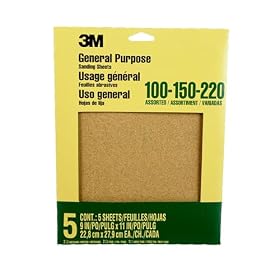
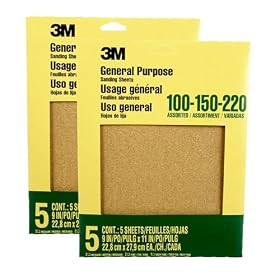
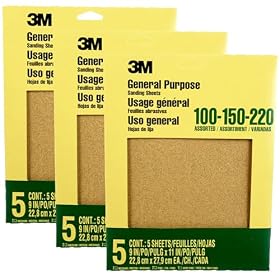
Sandpaper prices vary widely by format, abrasive material, grit, backing, and package size. Here is how to compare the real cost for wood, paint, and refinishing jobs.
Sandpaper can cost anywhere from a small amount for a basic sheet to substantially more for specialty abrasives, sanding discs, or large multi-pack bundles. The exact price depends less on grit alone and more on the sandpaper’s format, abrasive material, backing, durability, and package size.
For most home projects, compare the cost per usable sheet, disc, or sanding surface rather than the package price. A cheaper sheet that wears out quickly may cost more overall than a longer-lasting abrasive.
What determines sandpaper cost?
Format and size
Basic rectangular sheets are often the simplest and least expensive format. They can be used by hand or cut into smaller pieces for a sanding block.
Sanding discs usually cost more per piece because they include a hook-and-loop or pressure-sensitive backing and are sized for a power sander. Detail-sander triangles, wide sanding belts, and other machine-specific shapes can also carry a higher unit cost.
Sanding sponges and blocks generally cost more than a single sheet, but they are reusable for some jobs and easier to grip on edges, profiles, and corners.
Abrasive material
Aluminum oxide is a common choice for general wood sanding and many paint-preparation jobs. It is widely available and usually offers a practical balance of cost and performance.
Silicon carbide paper is often selected for wet sanding, automotive finishing, and work that needs a sharper, finer cut. Specialty papers may cost more than basic general-purpose sheets.
Ceramic and other high-performance abrasives are designed for faster cutting and longer life, especially in demanding power-sanding applications. Their higher purchase cost may be worthwhile when they reduce paper changes or labor.
Grit range
Grit number describes the size of the abrasive particles, not a guaranteed price tier. Fine grits are not automatically more expensive than coarse grits. However, very fine finishing papers, polishing sheets, and specialty wet-or-dry products may be sold in smaller or more specialized packages.
A practical project may require several grits, so the total cost should include the complete progression. For example, preparing rough wood may require coarse or medium grit, followed by finer grits before stain or paint.
Package size
Single sheets or small packs make sense when you need one grit for a minor repair. Larger packs usually reduce the cost per piece, but only if you will use the extra paper before it wears out or becomes damaged.
A mixed-grit assortment can be convenient for occasional projects. It may not be the best value if it contains grits you do not need or too few pieces of the grits you use most.
Backing and attachment system
Paper-backed sheets are inexpensive and flexible, but they can tear when folded or used aggressively. Cloth-backed abrasives are generally more durable and may cost more.
For power sanders, make sure the disc or sheet has the correct diameter, hole pattern, and attachment style. Buying the wrong format is more expensive than choosing a slightly higher-priced compatible abrasive.
Product prices and availability are accurate as of the date/time indicated and are subject to change. Any price and availability information displayed on Amazon.com at the time of purchase will apply to the purchase of this product.
Typical cost differences by sandpaper type
Exact prices change by retailer, brand, package size, and availability, but these general comparisons can help:
Basic sandpaper sheets: Usually the most economical option for hand sanding and small repairs.
Multi-grit sheet packs: Often a practical value for occasional woodworking, paint preparation, and refinishing.
Sanding sponges and blocks: More expensive than a single sheet, but useful for edges, corners, contours, and wet sanding.
Random-orbit and finishing-sander discs: Higher total project cost because they are machine-specific, though they can save time.
Wet-or-dry and automotive finishing paper: Often costs more than ordinary dry-use paper because of its backing and water-resistant construction.
Ceramic or premium power-sanding abrasives: Higher upfront cost, potentially offset by longer usable life and faster material removal.
These are comparisons, not fixed price quotes. Check the current package contents and calculate the unit cost before buying.
Product prices and availability are accurate as of the date/time indicated and are subject to change. Any price and availability information displayed on Amazon.com at the time of purchase will apply to the purchase of this product.
How much sandpaper will a project need?
The amount depends on the surface size, coating thickness, wood condition, sanding method, and abrasive quality. Power sanders can consume abrasives quickly when removing paint or leveling rough wood. Hand sanding may use fewer pieces but take longer.
Plan extra material when:
Removing several layers of paint or finish
Sanding hardwood or rough construction lumber
Switching through multiple grits
Working on edges, corners, or detailed profiles
Using a power sander for extended periods
Sanding between multiple coats of finish
Do not keep using a clogged, torn, or rounded-over abrasive just to avoid opening another sheet. A worn abrasive cuts poorly and can encourage excess pressure, uneven sanding, or heat buildup.
Product prices and availability are accurate as of the date/time indicated and are subject to change. Any price and availability information displayed on Amazon.com at the time of purchase will apply to the purchase of this product.
How to get the best value
Buy the right grit progression
Using an unnecessarily coarse grit can create scratches that require more sanding later. Starting too fine on a rough surface can waste paper because the abrasive removes material slowly.
Use the coarsest grit that safely handles the current task, then move to progressively finer grits. Remove the scratches from the previous grit before moving on.
Match the abrasive to the job
For ordinary bare wood and paint preparation, a general-purpose aluminum oxide product may be sufficient. For wet sanding, automotive finishing, or high-demand machine work, choose a product specifically labeled for that application.
Compare cost per piece and cost per usable surface
A package with more pieces is not automatically cheaper. Check:
The number of sheets, discs, or sponges
The size of each piece
The grit mix
Whether the abrasive is intended for hand or power sanding
Whether the product is reusable or washable
Whether the backing fits your tool
Use a sanding block when appropriate
A flat sanding block helps distribute pressure and lets a sheet cover more surface evenly. It can also reduce waste compared with folding a sheet loosely by hand. Use a contoured sponge or flexible abrasive where a rigid block would leave flat spots.
Is expensive sandpaper worth it?
Sometimes. Premium sandpaper is most likely to justify its cost when it removes material faster, lasts longer, resists clogging, or produces a more consistent finish. It can be less economical for a quick touch-up, a small craft project, or light between-coat sanding.
For a one-time household job, a modest multi-grit pack may be the sensible choice. For repeated woodworking, furniture refinishing, or power-sanding work, compare how long each abrasive remains effective instead of looking only at the initial package price.
What should you buy?
Choose basic sheets for small hand-sanding jobs and maximum flexibility. Choose sanding discs when you already own a compatible power sander and need efficient coverage. Choose sponges or blocks for corners, profiles, edges, and comfortable hand control. Choose wet-or-dry or specialty finishing paper when the material or finishing process specifically requires it.
Before ordering, confirm the grit, dimensions, backing type, attachment system, and number of pieces. Those specifications affect the real cost more than the package label alone.
FAQ
What is the cheapest type of sandpaper?
Basic paper-backed sheets are usually the least expensive format, especially when sold in larger packs. The lowest package price is not always the lowest overall cost if the abrasive wears out quickly or is unsuitable for the job.
Is higher-priced sandpaper worth buying?
It can be worthwhile for heavy stock removal, power sanding, hardwood, paint removal, or repeated refinishing. For a small occasional repair, standard general-purpose sheets may provide better value.
Does finer grit sandpaper cost more?
Not necessarily. Price is influenced more by abrasive material, backing, format, package size, and whether the product is designed for wet sanding or a power tool.
How can I compare sandpaper prices?
Compare the cost per sheet, disc, or sponge, then consider the size, grit, intended use, and expected working life. Also check whether the package contains grits you actually need.