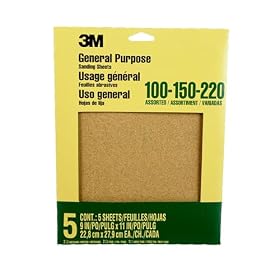
An assorted grit pack is useful for furniture refresh projects because different stages need different abrasives. Choose a pack with coarse, medium, and fine grits in the format your sander or hand-sanding work requires.
Assorted grit pack for a furniture refresh
An assorted grit pack can cover the main stages of a furniture refresh: removing an old finish, smoothing scratches, preparing bare wood, and sanding between coats. The most useful pack usually includes coarse, medium, and fine grits rather than many sheets of nearly identical grades. Before buying, match the pack’s format—sheets, discs, or sanding sponges—to your tools and the furniture surfaces you need to sand.
Which grits do you need?
Furniture projects commonly use several grit ranges. The exact choice depends on the finish, wood species, and how aggressively you need to remove material.
Coarse grit, roughly 40–80: Removes stubborn paint, varnish, adhesive, and heavy surface damage. Use carefully because it can leave deep scratches that require several later sanding steps.
Medium grit, roughly 100–150: Smooths coarse-sanding scratches and levels minor roughness. This is often the most useful range for general furniture preparation.
Fine grit, roughly 180–220: Prepares wood for paint or stain and refines the surface after medium sanding.
Very fine grit, roughly 240 and higher: Useful for light between-coat sanding and final smoothing, depending on the finish manufacturer’s instructions.
A pack containing coarse, medium, and fine grades is generally more practical than a pack made entirely of fine paper. Fine sandpaper will not efficiently remove a thick finish, while starting with an unnecessarily coarse abrasive can create scratches that are difficult to hide under stain.
Choose the right assortment for the job
For painted furniture
Look for a pack with coarse or medium-coarse sheets for removing loose paint and a medium-to-fine selection for smoothing the surface before priming. If the existing paint may contain lead—especially on older furniture—do not dry-sand it casually. Follow local safety guidance and consider professional assessment or lead-safe methods.
For stained or varnished wood
A medium-coarse grit may help dull or remove a finish, but chemical stripping or a scraper can be more appropriate for thick coatings. Use medium and fine grits after stripping to remove residue and sanding marks. If you plan to stain the wood, avoid ending with an extremely fine grit unless the stain manufacturer recommends it; over-smoothing can reduce stain absorption.
For a light refresh
If the furniture is structurally sound and the finish is mostly intact, a pack focused on medium and fine grits may be enough. Lightly scuffing the existing finish can improve primer or paint adhesion without removing every layer.
For raw or newly repaired wood
Choose medium grits for leveling repairs and fine grits for final smoothing. Very coarse paper is usually unnecessary unless the surface has severe damage or a large amount of material must be removed.
Mixed grit sandpaper sheets for hand sanding furniture
Product prices and availability are accurate as of the date/time indicated and are subject to change. Any price and availability information displayed on Amazon.com at the time of purchase will apply to the purchase of this product.
Match the pack to your sanding method
Sandpaper sheets
Sheets are versatile for hand sanding, sanding blocks, and detail work. Check the sheet dimensions and whether the paper can be cut into smaller pieces. If you use a hook-and-loop or clamp-style orbital sander, ordinary sheets may not attach properly unless they are cut or mounted in the correct way.
Sanding discs
Discs are designed for random orbital or orbital sanders. Match the disc diameter, hole pattern, and attachment style to your sander. A disc with the wrong size or dust-hole pattern may not fit correctly or collect dust effectively.
Sanding sponges
Sponges conform better to edges, profiles, and curved furniture parts than flat sheets. They are convenient for hand sanding but may not remove material as quickly as a rigid sanding block and can wear faster on broad, rough surfaces.
Sanding blocks
A sanding block keeps the abrasive flatter and helps reduce accidental dips in broad surfaces. It is particularly useful when preparing tabletops, cabinet sides, and drawer fronts by hand. A flexible block can help on slightly curved areas, while a rigid block is better for keeping flat surfaces level.
Product prices and availability are accurate as of the date/time indicated and are subject to change. Any price and availability information displayed on Amazon.com at the time of purchase will apply to the purchase of this product.
Abrasive material and backing matter
The abrasive material affects durability and cutting behavior. Aluminum oxide is a common general-purpose option for wood and many painted surfaces. Silicon carbide is often used for fine finishing and some wet-sanding applications. Ceramic abrasives can be useful for faster stock removal, but the product must be suitable for the material and tool.
Backing also affects handling. Paper-backed abrasives are economical and flexible. Cloth-backed products are typically more tear-resistant and can be useful for heavier work or edges. For furniture, the best choice is usually the one that fits the sanding method and provides enough durability for the finish being removed.
Do not assume that a higher abrasive rating or a premium backing automatically makes a pack better. A balanced range of grits and a compatible format usually matter more for a one-time furniture refresh.
Product prices and availability are accurate as of the date/time indicated and are subject to change. Any price and availability information displayed on Amazon.com at the time of purchase will apply to the purchase of this product.
What to check before buying
Grit range: Make sure the pack includes the grades needed for removal, smoothing, and finishing.
Grit progression: Useful assortments avoid forcing you to jump from very coarse directly to very fine paper.
Format: Confirm whether the pack contains sheets, discs, sponges, or a combination.
Tool compatibility: For power sanding, verify disc diameter, hole pattern, attachment system, and any manufacturer restrictions.
Quantity by grit: A pack with only one sheet of the grit you will use most may be less useful than a smaller assortment with multiple medium and fine pieces.
Dust resistance: Stearated or clog-resistant products can help when sanding paint or some finishes, but they are not a substitute for dust extraction and proper ventilation.
Wet or dry use: Use wet-sanding paper only when the product and finish specifically support wet sanding. Keep liquids away from powered tools unless the tool and procedure are designed for that use.
How to use the assortment efficiently
Start with the least aggressive grit that can do the job. Sand with the grain on visible wood surfaces, and remove dust before moving to the next grade. Do not skip too many grit levels after using coarse paper; the deeper scratches may remain visible through paint or stain.
On broad, flat areas, use a sanding block or compatible power sander with light, even pressure. Excessive pressure can reduce the tool’s effectiveness, clog the abrasive, and create uneven areas. On edges and profiles, hand sanding is easier to control and helps prevent rounding over details.
Between coats of primer, paint, or finish, use the fine grit specified by the coating manufacturer and sand only enough to remove nibs or roughness. Wipe or vacuum away dust before recoating.
Wear eye protection and a suitable dust mask or respirator for the material and workspace. Provide ventilation, control dust with a compatible vacuum when possible, and follow the coating, tool, and abrasive manufacturer’s instructions.
When an assorted pack is not the best choice
A mixed pack may be wasteful if you already know you need one format and one grit for a small touch-up. It may also be the wrong choice for a large refinishing project where you will use many discs or sheets of a single grade. In those cases, buying larger quantities of the specific compatible grit can reduce interruptions and provide more consistent results.
If the furniture has veneer, thin edges, delicate decorative details, or an unknown old coating, aggressive sanding can cause permanent damage. Use a cautious approach, test an inconspicuous area, and consider a professional refinisher when the piece is valuable or the coating presents a safety concern.
FAQ
What grit sandpaper should I use first on old furniture?
Use the least aggressive grit that can remove the existing finish. Medium-coarse paper is often suitable for light removal, while coarse paper may be needed for thick or stubborn coatings. Coarse grit can leave deep scratches, so progress through intermediate grits afterward.
Is a mixed grit pack better than buying one grit?
For a furniture refresh, usually yes, because removal, smoothing, and between-coat sanding require different grades. Buy single-grit packs instead when you have a large project and already know which grit and format you will use most.
What grit should I use before painting furniture?
Use a medium grit to smooth repairs or remove sanding marks, then a fine grit to prepare the surface for primer or paint. Follow the primer manufacturer’s instructions, especially when scuff-sanding an existing finish rather than sanding to bare wood.
Can I use orbital sander discs from any assorted sandpaper pack?
No. Check the disc diameter, attachment style, hole pattern, and compatibility with your specific sander. A sheet assortment is not a substitute for correctly sized discs.
How many grits do I need to refinish one piece of furniture?
Many projects can be handled with three stages: coarse or medium-coarse for removal, medium for smoothing, and fine for final preparation. Delicate pieces or projects with several finish coats may require additional grit steps.