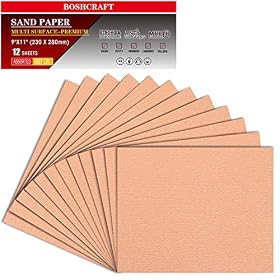
120-grit sandpaper is often the workhorse of a project, so it can disappear faster than expected. Here is how to estimate your supply, reduce waste, and choose the right format before buying more.
120-grit sandpaper is commonly used for shaping wood, removing old finish, smoothing filler, and preparing surfaces for paint. Because it sits in the middle of many sanding sequences, it may do more work than any other grit—and wear out quickly. Buying extra 120 is sensible when the job includes a large surface, rough material, paint removal, or power sanding, but excessive consumption can also indicate the wrong paper, a clogged abrasive, too much pressure, or an unsuitable sanding tool.
Why 120-grit sandpaper disappears so quickly
It is doing several jobs
A typical wood or refinishing project may use 120 grit to remove scratches left by a coarser grit, level minor imperfections, and prepare the surface for a finer finish. That makes it a frequent transition grit rather than a one-purpose paper.
If you are sanding through old paint, uneven boards, filler, or damaged finish, 120 grit may also be removing more material than expected. A large amount of stock removal can consume abrasive quickly.
The abrasive is clogged
Paint, primer, resin, softwood dust, and uncured filler can fill the spaces between abrasive grains. The sheet may look intact but stop cutting effectively. Continuing to sand with a clogged sheet creates heat and friction without much progress, so more paper gets used.
Use paper intended for the material when possible, and allow coatings or filler to cure according to the product instructions before sanding. For some surfaces, a stearated or otherwise clog-resistant paper may last longer, but compatibility varies by product.
Too much pressure is being applied
Heavy pressure does not necessarily make sanding faster. It can flatten the abrasive, generate heat, clog the surface, and wear the backing prematurely. Let the abrasive do the cutting with moderate, even pressure.
On a random-orbit sander, excessive downward force can also interfere with the tool’s normal motion and dust removal. Keep the sander moving and let its weight provide most of the contact pressure.
The paper is being used past its useful life
A sheet does not need to be completely torn or visibly worn out before it should be replaced. Replace it when it cuts slowly, leaves uneven scratch patterns, overheats the workpiece, or requires noticeably more force.
Trying to stretch a dead sheet often wastes time and can produce a surface that needs additional correction with a fresh abrasive.
How much extra 120-grit paper should you buy?
There is no reliable universal sheet count because consumption depends on the material, surface area, tool, pressure, dust extraction, and whether you are sanding by hand or with a power sander.
A practical approach is to estimate your initial need, then keep a meaningful reserve rather than buying only the exact count. Buy more than the minimum when:
You are removing paint, varnish, or a heavy finish.
The wood is rough, dirty, resinous, or uneven.
You are sanding filler or joint compound.
You are using a powered sander over a large area.
The project has many edges, corners, or profiles.
You cannot easily return to the store during the job.
For a small hand-sanding repair, a modest pack may be enough. For furniture, cabinets, floors, doors, or multiple panels, buying a larger compatible pack is usually more convenient than stopping after every few sheets or discs.
Do not buy only by sheet count. Compare the format, abrasive backing, hole pattern, attachment method, and intended material. A cheaper pack that does not fit your sander or clogs immediately is not a useful reserve.
120-grit sandpaper sheets for hand sanding and sanding blocks
Product prices and availability are accurate as of the date/time indicated and are subject to change. Any price and availability information displayed on Amazon.com at the time of purchase will apply to the purchase of this product.
Choose the format that matches the job
Sheets
120-grit sheets work well with sanding blocks, hand sanding, detail work, and flat areas. They can often be folded or cut, but cutting a sheet reduces the number of full-size pieces available. Check whether the paper is intended for hand use or hook-and-loop or clamp attachment on a sander.
Discs
Discs are convenient for random-orbit and other compatible sanders. The hole pattern matters: dust-extraction holes must align with the tool or pad for effective collection. The attachment system must also match the sanding pad.
A disc that fits the diameter but not the hole layout or attachment method is not a suitable replacement.
Sanding sponges
A 120-grit sanding sponge can be useful on edges, trim, profiles, and surfaces where a rigid sheet tends to crease. It is not automatically a substitute for a flat sheet or disc on broad panels. The flexible shape may help with contours but can also round over sharp edges if used carelessly.
120-grit sanding discs for compatible random-orbit sanders
Product prices and availability are accurate as of the date/time indicated and are subject to change. Any price and availability information displayed on Amazon.com at the time of purchase will apply to the purchase of this product.
How to make 120 grit last longer
Start with the right coarser grit when substantial material must be removed. Do not force 120 grit to perform heavy leveling if the job calls for a coarser abrasive.
Remove dust between stages. Use a vacuum or appropriate dust-removal method, then inspect the surface before continuing.
Keep the abrasive flat. A sanding block helps distribute pressure during hand sanding.
Use moderate pressure. Excess force accelerates clogging and heat buildup.
Keep a consistent motion. Avoid holding a power sander in one spot.
Replace clogged paper promptly. Cleaning methods are product-specific; follow the abrasive manufacturer’s instructions rather than scraping or damaging the surface.
Use suitable dust extraction. Dust buildup can reduce cutting efficiency and make the work area harder to inspect.
Progress through grits rather than skipping too far. The next grit should remove the previous grit’s scratches without requiring unnecessary passes.
120-grit clog-resistant sandpaper for paint and wood
Product prices and availability are accurate as of the date/time indicated and are subject to change. Any price and availability information displayed on Amazon.com at the time of purchase will apply to the purchase of this product.
When buying extra 120 is the right decision
Buying extra 120-grit paper is reasonable when it is the central grit in your sanding sequence and the project has enough surface area or coating removal to consume multiple pieces. It is especially worthwhile if the paper is sold in a compatible bulk pack and the remaining sheets will stay dry and protected from damage.
Avoid overbuying a format you may not use again. If the project is mostly detailed trim, sanding sponges may be more practical than discs. If it is a large flat surface, compatible discs or full sheets may provide better coverage and consistency.
If 120 grit is wearing out almost immediately on clean, relatively soft material, first check the abrasive quality, tool compatibility, dust extraction, pressure, and surface condition. If the sander’s pad is worn, warped, or unable to hold the abrasive securely, replacing the pad may solve the problem. Persistent motor, vibration, overheating, or electrical issues should be handled according to the tool manual and, where appropriate, by a qualified repair professional.
120-grit sanding sponges for edges and contoured surfaces
Product prices and availability are accurate as of the date/time indicated and are subject to change. Any price and availability information displayed on Amazon.com at the time of purchase will apply to the purchase of this product.
Bottom line
120 grit often disappears because it is the main cleanup and preparation grit in a project—not necessarily because something is wrong. Estimate based on surface area and material, keep a reserve, and buy the format that matches your tool and workpiece. If consumption seems extreme, reduce pressure, address clogging, improve dust removal, and confirm that the abrasive and sanding pad are compatible.
FAQ
Is 120 grit good for general wood sanding?
Yes, 120 grit is a common middle grit for smoothing wood and removing scratches from a coarser abrasive. It may not be coarse enough for major leveling or fine enough for the final finish, so the best sequence depends on the wood and finish.
Why does sandpaper clog when sanding paint or filler?
Paint, primer, resin, and filler can fill the spaces between abrasive grains, preventing the paper from cutting. Let coatings or filler cure properly, use a suitable clog-resistant abrasive when available, reduce pressure, and replace clogged paper instead of forcing it to work.
Should I buy 120-grit sheets or discs?
Choose sheets for hand sanding, blocks, and detail work. Choose discs when your power sander uses the matching diameter, attachment system, and hole pattern. Sanding sponges are useful for edges and contoured areas but are not always the best choice for broad flat surfaces.
How do I know when 120-grit sandpaper is worn out?
Replace it when it cuts slowly, clogs, produces excess heat, leaves an inconsistent scratch pattern, or requires more pressure than a fresh piece. A paper can be worn out before the abrasive looks completely smooth.