Abrasive that removes wood quickly is not automatically the best sandpaper. Removal speed matters for rough shaping and heavy stock removal, but scratch quality, paper life, loading, and how much cleanup or re-sanding follows can matter just as much. A useful review evaluates the finish and the time it takes to reach it—not just how quickly the workpiece gets thinner.
Reviews · Tue Sep 15
Reviewers comparing only how fast wood disappears
Fast stock removal can be useful, but it does not tell you whether sandpaper leaves a clean surface, wears evenly, or saves time overall. A fair review considers the whole sanding job.
Why removal speed is not enough
A fast-cutting abrasive can leave scratches that take extra work to remove with finer grits. It may also wear quickly, clog with dust or resin, or cut unevenly. In those cases, the initial speed advantage may disappear over the full job.
The right balance depends on the task. When flattening rough lumber, removing old finish, or shaping an edge, fast cutting may be a priority. For final smoothing, between-coat sanding, or refinishing, a consistent scratch pattern and a predictable finish may matter more.
Sandpaper sheets for hand sanding
 BOSHCRAFT 50 Pcs 1/4 Sheet Sand Paper 5.5" x 4.5" – 80/150/320/400 Grit 8 Sheets…BOSHCRAFT
$13.99 as of
View on Amazon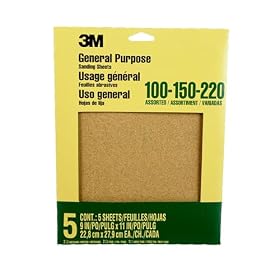 3M Aluminum Oxide Sandpaper, 5 Sheets, Assorted Grit 100-150-220, 9 x 11 in3M
$5.48 as of
View on Amazon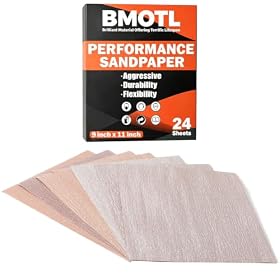 BMOTL Aluminum Oxide Sandpaper Sheets 9x11, 120-600 Assorted Grit 24 PackBMOTL
$9.99 as of
View on Amazon
Product prices and availability are accurate as of the date/time indicated and are subject to change. Any price and availability information displayed on Amazon.com at the time of purchase will apply to the purchase of this product.
What a useful sandpaper review should compare
Scratch pattern and finish
Check the surface after sanding, not just how much material came off. Look for deep or irregular scratches, pigtails, and marks that remain visible after moving to the next grit. Reviewers should note whether the abrasive’s scratches are easy to remove in the next step.
Abrasive grit numbers are useful for choosing a progression, but they do not tell the whole story about a specific product’s finish. Avoid skipping grits unless the project and the abrasive manufacturer’s guidance support it; a finer grit may not remove the deeper scratches left by a much coarser one.
Cutting consistency and useful life
Abrasive can start aggressively and then dull or clog. A review should consider whether it keeps cutting through a reasonable portion of the job and whether wear is even across the sheet or disc. If a product cuts quickly at first but needs frequent replacement, that affects both time and material use.
Loading depends on the material, finish, abrasive, and dust collection. Resinous wood, paint, and some finishes can clog abrasive faster. Reviews should identify the material and task rather than treating one result as universal.
Time to a finished surface
The more practical measure is the time needed to reach the intended result, including abrasive changes, clearing clogged paper, and fixing scratches. A review can distinguish rough stock removal from final-surface work rather than collapsing them into a single “fastest” ranking.
Format, backing, and dust handling
Sheets, sanding sponges, and machine discs serve different jobs. Backing affects how the abrasive feels and conforms to a surface; hole patterns on discs need to match the sander’s dust ports for effective collection. Reviews should say which format and tool were used, since a result with a hand block may not transfer to a random-orbit sander.
Abrasive discs for machine sanding
 YNZDRWA 70 PCS 5 Inch 8-Hole Sanding Discs, 9 Mixed GritsYNZDRWA
$6.99 as of
View on Amazon S SATC 72 PCS 5 Inch 8 Hole Hook and Loop Adhesive Sanding Discs Sandpaper…S SATC
$9.99 as of
View on Amazon WORKPRO 80-Piece Sanding Disc Set,5-Inch 8-Hole Hook and Loop Sanding Discs, 60, 80, 100, 120,…WORKPRO
$14.19 as of
View on Amazon
Product prices and availability are accurate as of the date/time indicated and are subject to change. Any price and availability information displayed on Amazon.com at the time of purchase will apply to the purchase of this product.
How to judge a speed comparison
A comparison is more informative when it uses the same wood species and starting condition, grit range, sanding area, tool, dust collection, and sanding approach for each product. The reviewer should also explain how pressure and sanding time were kept comparable. If those details are missing, treat a speed ranking as a limited observation rather than a general buying rule.
Look for results separated by task and grit. A product that excels at coarse removal may not be the best choice for final smoothing, and a result on bare wood may not predict performance on paint or finish. Prefer reviews that show or describe the surface between grit changes, not just the final amount of material removed.
Choose by the job, not a single speed score
- Rough shaping or heavy removal: Prioritize cutting ability, but check whether the next grit can remove the resulting scratches without excessive extra work.
- General smoothing: Look for even wear, manageable loading, and a predictable scratch pattern.
- Between-coat or final sanding: Favor control and a consistent finish over maximum stock removal; follow the coating maker’s guidance on grit.
- Machine sanding: Confirm the abrasive format and disc-hole pattern fit the sander, and consider whether dust collection is part of the comparison.
A speed-only review can help answer one narrow question, but it cannot establish which sandpaper is best overall. The most useful choice is the abrasive that reaches the required finish reliably for your material, tool, and sanding method.
FAQ
Is faster-cutting sandpaper always better?
No. Fast cutting can help with rough removal, but it may leave scratches that take longer to remove or wear and clog quickly. Judge the time and effort needed to reach the intended finish.
What should I look for in a sandpaper review?
Look for the material, grit, format, tool, dust collection, scratch quality, loading, wear, and whether the review evaluates the finished surface as well as removal speed.
Can I compare hand-sanding sheets with machine sanding discs?
Not as a direct performance comparison. The format, backing, tool action, pressure, and dust collection differ. Compare products under similar conditions and for the same type of job.